GEOTECHNICALENGINEERING
RED DEER
HomeRoadwayRigid pavement design

Rigid Pavement Design in Red Deer: Engineering for Alberta's Freeze-Thaw Extremes

Sound ground. Sound decisions.

LEARN MORE

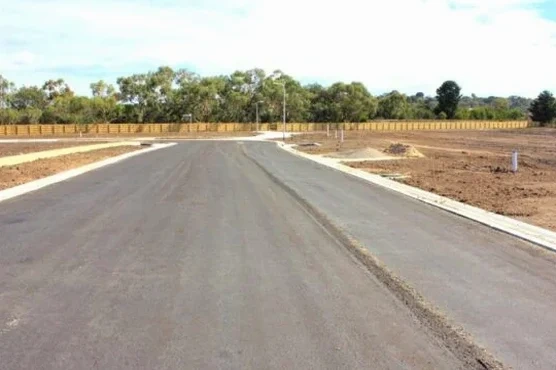
Red Deer sits squarely in a frost pocket where winter temperatures routinely plunge below -30°C and the ground freezes to depths exceeding 1.8 meters. Designing a rigid pavement here without accounting for frost heave and subsequent spring thaw weakening is a direct path to premature cracking. Our team approaches each project by integrating the subgrade's moisture sensitivity with a structural concrete slab designed per CSA A23.3. The silty clay till common across the Parkland region demands precise joint detailing and a solid base layer to prevent pumping. Before finalizing the concrete thickness, we typically run a CBR road subgrade assessment to quantify the support conditions, ensuring the pavement withstands not just traffic loads but also the relentless expansion and contraction cycles of Central Alberta's climate.

In Red Deer, a rigid pavement's lifespan is defined less by traffic and more by the integrity of its joint sealing and base drainage strategy during freeze-thaw cycles.
Our service areas

Methodology and scope

A common mistake in the Red Deer area is treating a rigid pavement like a flexible one with a stiffer surface. The performance of a jointed plain concrete pavement hinges entirely on aggregate interlock and a stable, uniform support system. Our design methodology starts with a fatigue analysis based on the projected 20-year equivalent single axle loads. We then specify panel dimensions that control curling stresses under Alberta's diurnal temperature swings, which can exceed 20°C in a single day during autumn. Key to this is the triaxial shear strength testing of the compacted subbase material to verify the modulus of subgrade reaction. This data feeds directly into the Westergaard and finite element models we use to optimize slab thickness, eliminating unnecessary overdesign while maintaining a target reliability of 95%.
Rigid Pavement Design in Red Deer: Engineering for Alberta's Freeze-Thaw Extremes
Technical reference — Red Deer

Site-specific factors

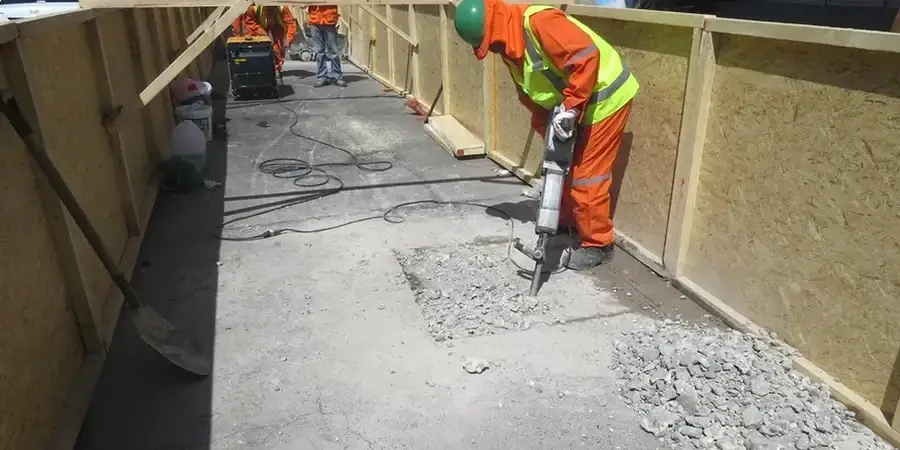
Red Deer's expansion through the 1970s and 80s pushed development onto glacial till plains and former wetland margins. A recurring failure we encounter is uncontrolled transverse cracking on arterial roads built over reworked clay without a drainage interlayer. The mechanism is straightforward: water trapped beneath the slab expands during a cold snap, generating differential heave pressures that exceed the concrete's tensile capacity. Once microcracks form, chloride from winter de-icing salts accelerates reinforcement corrosion. We mitigate this by specifying air-entrained concrete with a maximum 0.40 water-cement ratio and by designing load transfer dowels across all contraction joints. Where the natural soil shows high plasticity, we often combine the rigid pavement design with lime or cement stabilization techniques to create a non-frost-susceptible working platform.

Need a geotechnical assessment?

Reply within 24h.

Email: info@geotechnicalengineering.xyz

Watch the video

Applicable standards

CSA A23.1/A23.2-19: Concrete Materials and Methods of Construction, CSA A23.3-19: Design of Concrete Structures, NBCC 2020: National Building Code of Canada (Part 4, Structural Design), ASTM C1435 / C1435M-20: Standard Practice for Molding Roller-Compacted Concrete in Cylinder Molds, Alberta Transportation Technical Standards Branch: Bridge and Structural Design Criteria

Technical data

ParameterTypical value
Concrete Compressive Strength32 MPa at 28 days (CSA A23.1 Class C-2 exposure)
Maximum Aggregate Size25 mm for slabs > 200 mm thickness
Water-Cement Ratio≤ 0.40 for XC-XD exposure classes
Air Content5-8% for severe freeze-thaw exposure
Joint Spacing (JPCP)4.0 to 4.5 m for 250 mm slab on stabilized base
Load Transfer Efficiency> 75% via dowel bars at contraction joints
Base Layer Permeability≥ 150 m/day for open-graded drainage layer

Frequently asked questions

What is the typical cost range for rigid pavement design in Red Deer?

In Red Deer, the engineering design service for a rigid pavement project typically ranges from CA$2,840 to CA$7,700, depending on the project's linear meters, the number of borings required, and the complexity of the intersection geometries.

How does a rigid pavement handle Red Deer's extreme freeze-thaw cycles?

Durability is achieved through a combination of air-entrained concrete and a non-frost-susceptible base. The design specifies air void spacing factors per CSA A23.1 and a permeable drainage layer to prevent water from being trapped directly beneath the slab, which is the primary cause of heave-related cracking in the region.

What soil testing is required before starting the concrete pavement design?

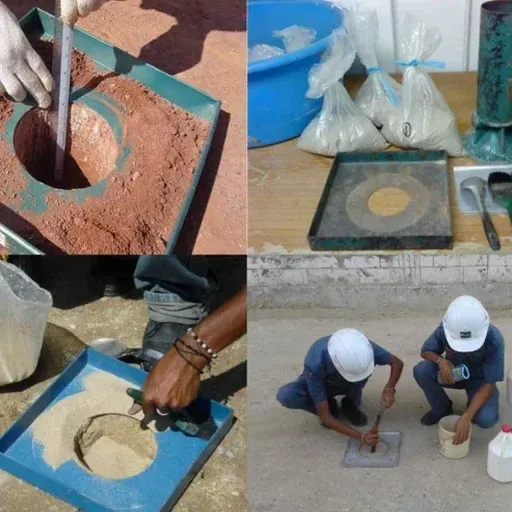
We require a comprehensive geotechnical investigation including atterberg limits on the subgrade, a grain-size analysis of the proposed base aggregate, and a CBR or resilient modulus test. For silty clay tills common in Red Deer, we also recommend a sulfate content test to ensure the native soil is not chemically aggressive to the concrete.

When should dowel bars be used in a Red Deer roadway?

We specify epoxy-coated steel dowel bars on all heavy-traffic arterials and industrial lots where the slab thickness exceeds 200 mm. The dowels provide load transfer across transverse contraction joints, preventing faulting. In Red Deer's climate, we ensure the dowels are greased to allow longitudinal movement during thermal expansion and contraction.

Location and service area

We serve projects in Red Deer and surrounding areas.

View larger map