GEOTECHNICALENGINEERING
RED DEER
HomeInvestigationExploratory test pit

Exploratory Test Pits in Red Deer: Know Your Ground

Sound ground. Sound decisions.

LEARN MORE

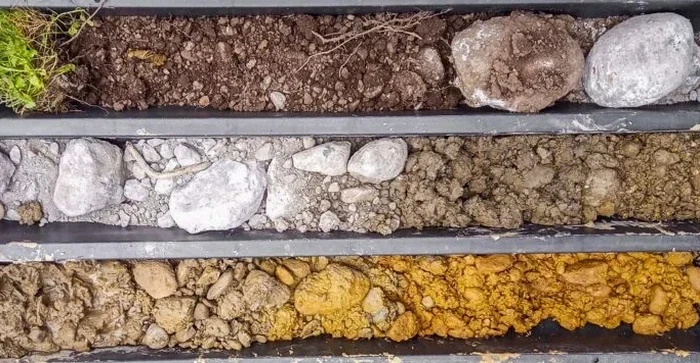
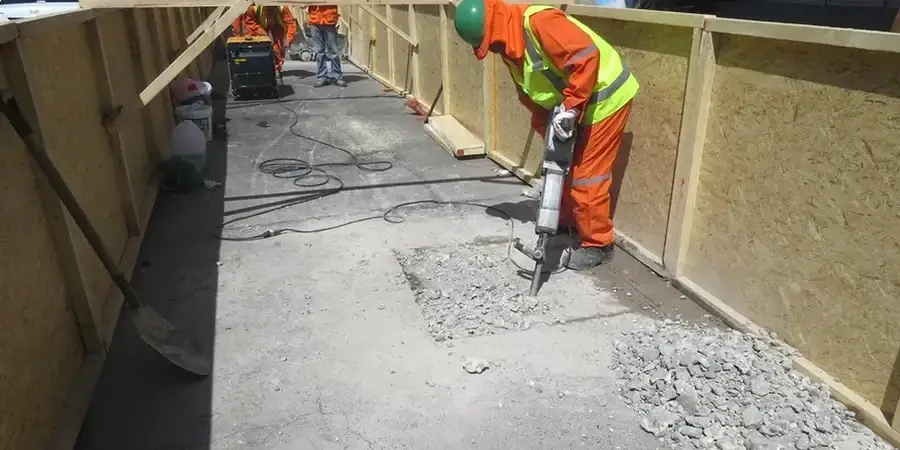
Building on the east side of Red Deer near the Piper Creek system is nothing like excavating up on the Waskasoo plateau. The river valley cuts through glacial till, lacustrine silts, and sandy deposits that change abruptly within a single city block. An exploratory test pit gives you the visual confirmation that borehole logs alone cannot capture. We open the ground to map stratigraphy, measure in-situ density, and identify buried organics or groundwater seepage before a shovel hits the ground. Developers around the Gaetz Avenue corridor and industrial lots in Edgar Industrial Park rely on this method when shallow footings or underground utilities are on the line. It pairs naturally with a plate load test when bearing capacity needs a direct measurement right at formation level.

A test pit turns subsurface guesswork into a documented site condition, saving foundation redesign costs before concrete is poured.
Our service areas

Methodology and scope

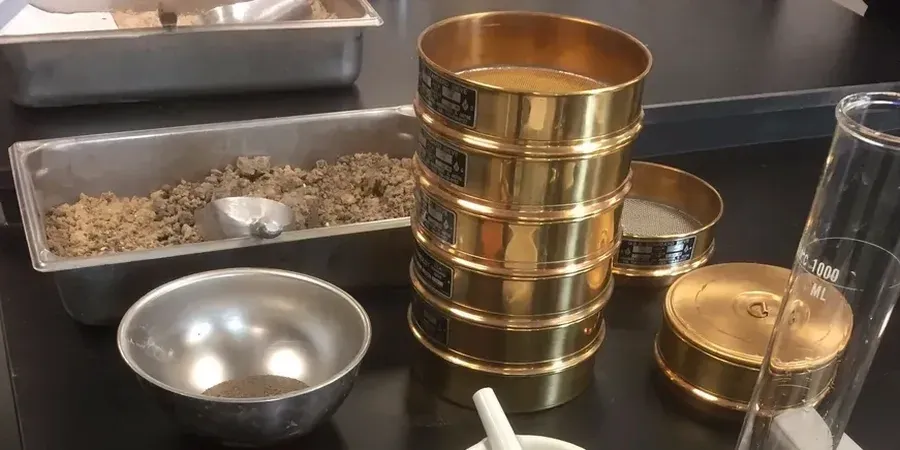
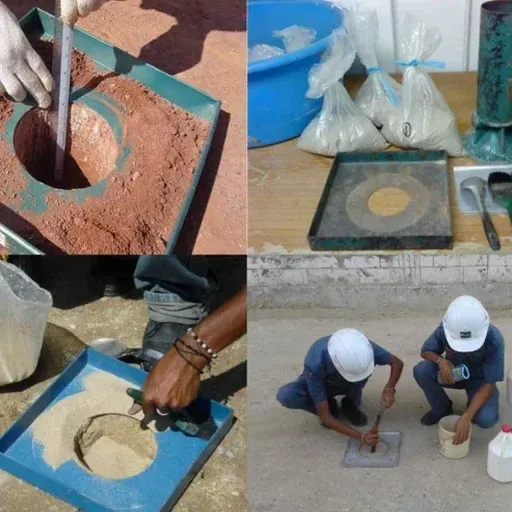
The surficial geology across Red Deer is dominated by the Battle River Formation—interbedded sandstones and mudstones overlain by up to 12 metres of glacial drift. A test pit reaches these materials directly, letting our field team log texture, moisture condition, and consistency with a tape measure and a hand penetrometer. Depth customarily ranges from 1.5 to 4.5 metres depending on groundwater, with spoil stockpiled for backfill. Where the soil profile suggests variable compaction, we often coordinate with a sand cone density test to benchmark field dry density against Proctor targets. For projects near the riverbank escarpment, combining observations with a slope stability assessment helps quantify setback requirements under the City of Red Deer Land Use Bylaw.

Typical deliverables include a graphic log, a photo record of the pit face, and a concise summary that flags any lenses of soft clay or perched water. Turnaround is fast—often within two business days—because we know your excavation schedule waits for no one.
Exploratory Test Pits in Red Deer: Know Your Ground
Technical reference — Red Deer

Site-specific factors

Red Deer’s expansion through the 2000s pushed development onto former agricultural land north of Highway 11A, where backfill history is rarely documented in city records. We have opened pits in these areas and encountered buried concrete washout, organics, and uncompacted fill that rendered a standard footing design unworkable. Skipping the exploration phase in these transition zones invites differential settlement, wet basements, and expensive change orders once the excavator exposes the truth. A single exploratory test pit placed at the building corner nearest the suspect ground often reveals enough to adjust the foundation depth or switch to a compacted granular pad.

Need a geotechnical assessment?

Reply within 24h.

Email: info@geotechnicalengineering.xyz

Applicable standards

NBCC 2020 – Part 4, Structural Design (seismic hazard value for Red Deer: Sa(0.2)=0.12), CSA A23.3-19 – Design of Concrete Structures (excavation inspection requirements), ASTM D2488 – Standard Practice for Description and Identification of Soils (Visual-Manual Procedure), City of Red Deer Land Use Bylaw 3357/2021 – Geotechnical report triggers for slope hazard areas, Alberta OH&S Code – Part 22 Excavating and Tunnelling (trench safety during pit logging)

Technical data

ParameterTypical value
Typical depth range1.5 m – 4.5 m (limited by groundwater or stability)
Bucket width0.6 m – 1.2 m (mini-excavator or backhoe)
Logging standardCSA A23.3 / ASTM D2488 visual-manual classification
In-situ tests performedHand penetrometer, pocket shear vane, density drive cylinder
Sampling methodBulk disturbed samples from each distinct stratum
Backfill protocolCompacted lift replacement, surface restored to pre-excavation grade
ReportingGraphic pit log + photo panel + interpretive letter report

Frequently asked questions

How much does an exploratory test pit cost in Red Deer?

For a standard program of two to three pits within the city limits, budget between CA$740 and CA$1,090 per pit. The final amount shifts with depth, traffic control requirements on busy corridors like Taylor Drive, and whether we are coordinating with a vacuum truck for daylighting existing utilities.

Do I need a test pit if I already have a borehole report?

Often yes, especially for shallow foundations. A borehole gives you a vertical core but misses lateral variability over the footing footprint. A test pit exposes a continuous face, letting you see how sand lenses pinch out or how fill thickness changes across just a few metres—details that influence concrete quantity and excavation support.

What permits are required before you dig in Red Deer?

We handle the Alberta One-Call utility locate request at least three business days ahead. If the pit falls within a City right-of-way or a slope hazard zone mapped under the Land Use Bylaw, a right-of-way consent or development permit may be needed; we flag that early so your schedule stays intact.

Location and service area

We serve projects in Red Deer and surrounding areas.

View larger map