GEOTECHNICALENGINEERING
RED DEER

Geotechnical Engineering in Red Deer

Sound ground. Sound decisions.

LEARN MORE

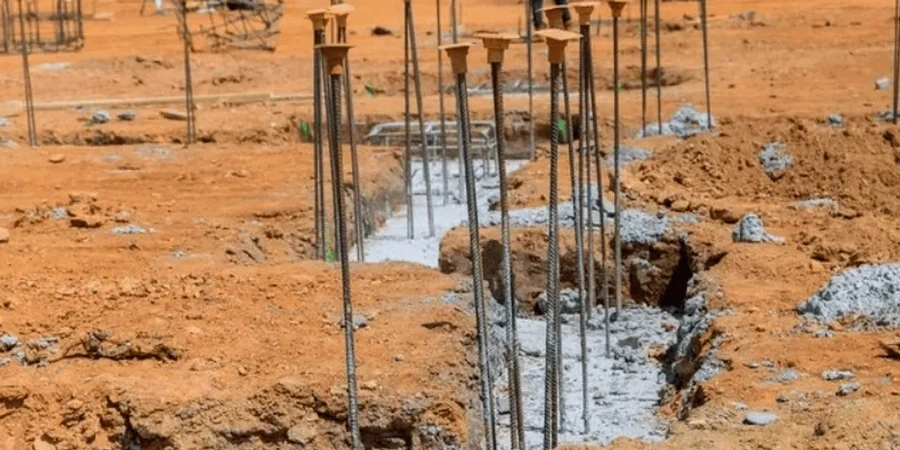
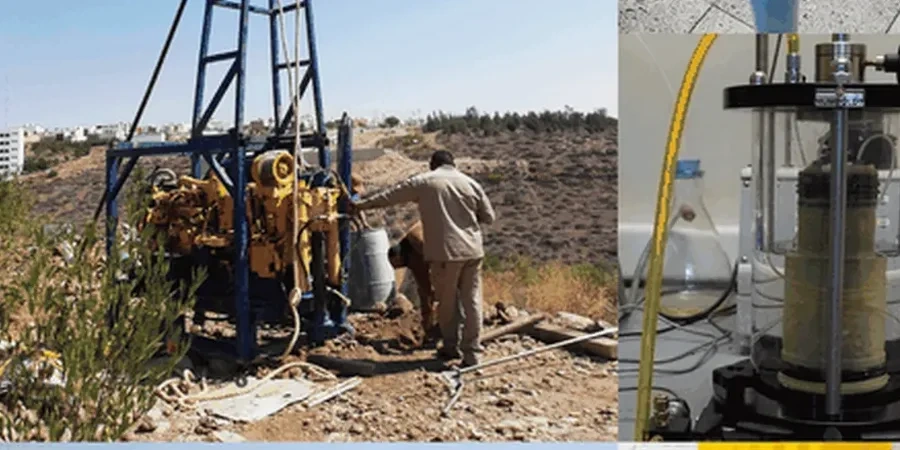
In Red Deer, every foundation design starts with the National Building Code of Canada (NBCC), but the real challenge lies beneath the surface. The city sits on a complex glacial landscape shaped by the last ice age, where the Red Deer River has carved deep valleys through thick sequences of clay till, glaciofluvial sands, and soft lacustrine silts. Our lab team sees the consequences of misjudging these soils regularly — cracking in new builds, settlement in commercial slabs, and slope creep along the river valley edges. A proper soil mechanics study quantifies what's down there: strength, compressibility, permeability. We test undisturbed Shelby tube samples from boreholes across neighborhoods like Anders, Clearview Ridge, and Vanier Woods, applying triaxial compression and incremental oedometer loading to determine how the soil will behave under the long-term loads of a Red Deer winter and the saturated conditions of spring thaw. Combined with a CPT test to get continuous stratigraphic profiling in the softer silts near Waskasoo Creek, we can identify weak lenses that standard sampling might miss altogether.

The difference between a foundation that performs for decades and one that fails in five years often comes down to how carefully you characterize the soil's consolidation history.
Geotechnical Engineering in Red Deer
Technical reference — Red Deer

Our service areas

Local geology

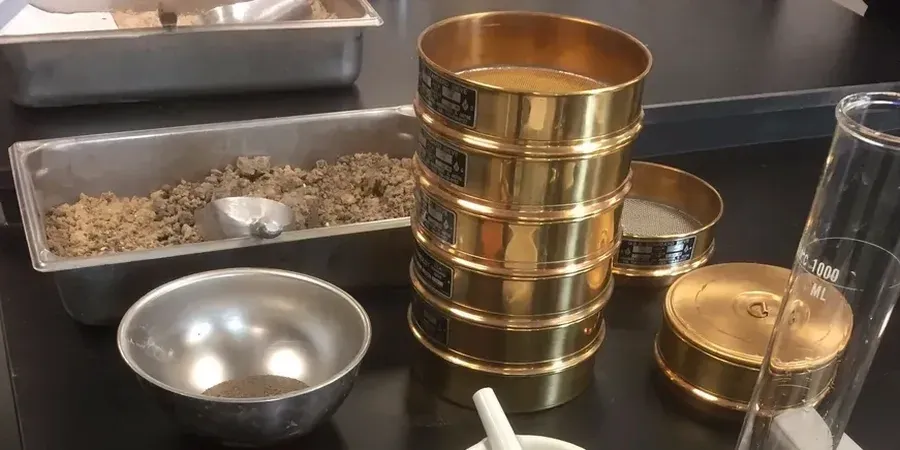
Red Deer's expansion over the past fifty years — from a small prairie settlement into Alberta's third-largest city — has pushed development onto increasingly marginal land. The benchlands south of the river, the low-lying areas near Gaetz Avenue, and the industrial parks along the Queen Elizabeth II corridor each present distinct geotechnical signatures. Historically, structures in the downtown core were founded on competent till at shallow depth, but newer subdivisions often encounter compressible lacustrine deposits that require careful evaluation. Our approach integrates field logging with the Atterberg limits test to classify the high-plasticity clays that dominate the region's glacial lake plains. When the plasticity index climbs above 25, we know we're dealing with a soil prone to significant volume change with moisture fluctuation — a reality for any Red Deer homeowner who's seen their basement floor shift after a wet season. We also run grain size analysis on the coarse channel deposits to confirm drainage capacity before recommending foundation drain designs.

Applicable standards

NBCC 2020 — National Building Code of Canada, CSA A23.3 — Design of Concrete Structures, ASTM D2435 — Standard Test Methods for One-Dimensional Consolidation, ASTM D4767 — Standard Test Method for Consolidated Undrained Triaxial Compression, ASTM D4318 — Standard Test Methods for Liquid Limit, Plastic Limit, and Plasticity Index

Need a geotechnical assessment?

Reply within 24h.

Email: info@geotechnicalengineering.xyz

Why choose us

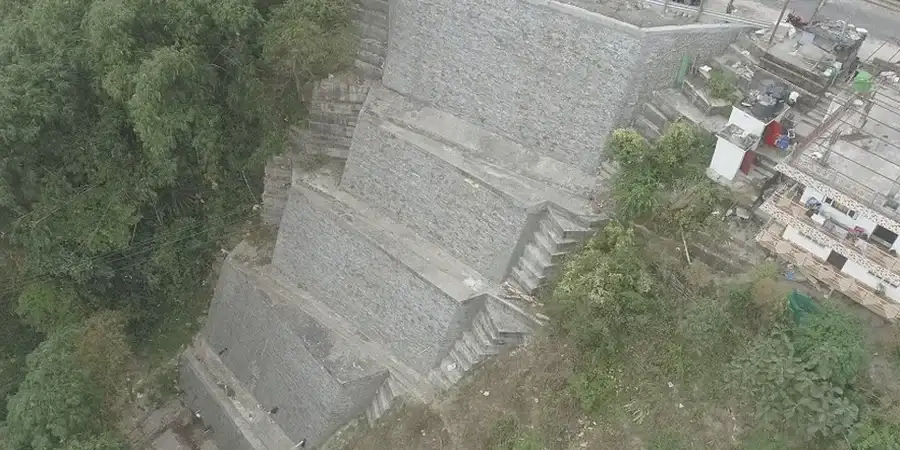
What we often encounter in Red Deer is a thin crust of stiff clay overlying softer, normally consolidated material — a profile that tricks the inexperienced into overestimating bearing capacity. A contractor will excavate two meters, see hard grey till, and assume they're set. But probe deeper, and you might find a pocket of saturated silt that will consolidate under load for years. The Red Deer River valley also introduces slope stability concerns. The valley walls are not static; they're actively adjusting through creep and occasional slumping, especially where the river undercuts the toe. We've investigated sites along the south bank where the factor of safety for a proposed retaining wall came back below 1.3 without remediation. For that kind of project, we pair the soil mechanics study with a slope stability analysis to model the failure surface and design the reinforcement. The NBCC 2020 seismic provisions apply here too — Red Deer sits in a low-to-moderate seismic zone, but the soft soil amplification effect can be significant for taller structures.

Technical data

ParameterTypical value
Undrained shear strength (Su) of clay till75–250 kPa
Compression index (Cc) of glaciolacustrine silt0.15–0.35
Permeability (k) of glaciofluvial sand1×10⁻⁴ to 1×10⁻² cm/s
Plasticity index (PI) range, regional clays12–45%
In-situ water content, near-surface till16–28%
Standard Proctor MDD, typical clay till1,780–1,940 kg/m³
Friction angle (φ'), dense sand channel deposits34°–40°

Frequently asked questions

What does a soil mechanics study cost in Red Deer?

A typical soil mechanics study for a residential lot in Red Deer ranges from CA$4,600 to CA$7,900, depending on the number of boreholes, depth of investigation, and the lab testing suite required. A commercial project with deeper drilling and advanced triaxial testing will be at the upper end or beyond.

How deep do you drill for a soil mechanics study in this area?

For a single-family home on clay till, we typically drill to 6–8 meters below grade. If the site is underlain by soft lacustrine deposits — common near the river valley — we extend to 12–15 meters to ensure we capture the full compressible layer thickness. The NBCC requires that the investigation depth extends to where the stress increase from the foundation is less than 10% of the in-situ effective stress.

Why is the Red Deer River valley so sensitive to slope movements?

The valley walls are composed of interbedded till, silt, and sand deposited during the last glaciation. Where the river erodes the toe of the slope, the overlying material loses support and can fail along weak silt seams. Seasonal groundwater changes accelerate the process. We run consolidated-undrained triaxial tests on the silt to determine the residual strength parameters needed for a reliable stability model.

How long does the lab testing phase take?

A standard suite — consolidation, triaxial, and classification tests — takes 3 to 4 weeks from sample arrival. Consolidation tests on soft silts require incremental loading over several days per specimen, and triaxial tests need back-pressure saturation that cannot be rushed without compromising the data.

Location and service area

We serve projects in Red Deer and surrounding areas.

View larger map