GEOTECHNICALENGINEERING
RED DEER
HomeGround improvementGrouting design

Grouting Design for Red Deer’s Glacial Soils

Sound ground. Sound decisions.

LEARN MORE

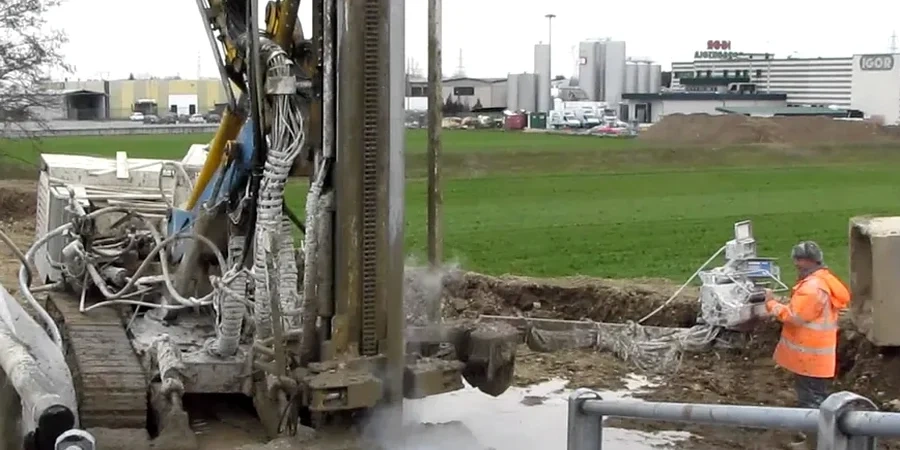
A common mistake in Red Deer is treating all glacial deposits as uniform. Contractors drill and pump grout at a set pressure, then wonder why the foundation still leaks or settles. The reality is that the city sits on a complex mix of glacial till, glaciofluvial sands, and lacustrine silts. Blanket grouting fails here. We see it often. The till is dense and overconsolidated. The sand lenses within it are loose and hungry for grout. Designing an injection program without first mapping these lenses wastes material and time. A proper in-situ permeability test tells you exactly where the grout will travel. Then a targeted CPT test can trace the lens geometry before you inject a single liter. That sequence saves projects in Red Deer.

Red Deer’s interbedded till and sand lenses make blanket grouting a gamble. Design beats guesswork every time.
Our service areas

Methodology and scope

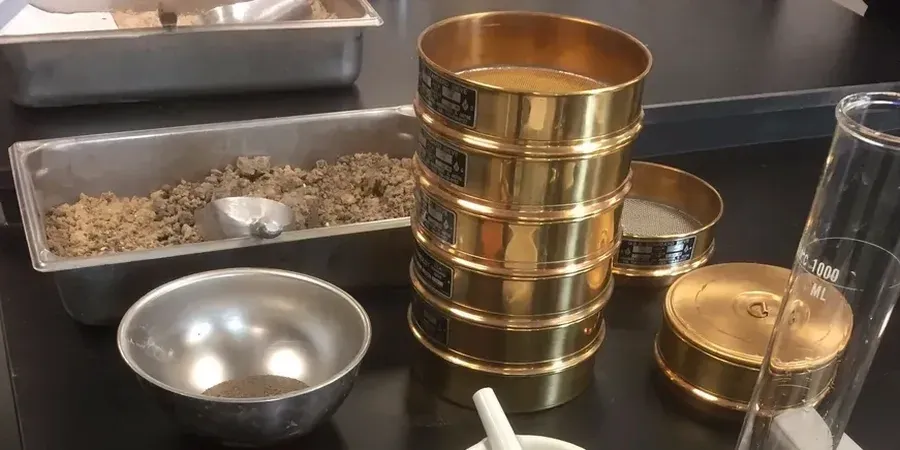
The National Building Code of Canada references CSA A23.3 for grouted anchors and CSA Z317 for injection work. In Red Deer, these standards intersect with a shallow groundwater table along the Red Deer River valley. Injection pressures that work in Calgary often cause hydrofracturing here. Our design approach accounts for this. We limit injection pressures in the upper 5 meters. We specify microfine cements when permeating silty sand, not standard Portland. The mix design changes block by block depending on the gradation curve from a grain-size analysis. We also verify the Atterberg limits of any clay seams encountered. A grout that works in sand will cake and fail in a clay layer. The design must adapt to that contrast.
Grouting Design for Red Deer’s Glacial Soils
Technical reference — Red Deer

Site-specific factors

The geological history of Red Deer left behind a blanket of glacial Lake Edmonton sediments. These silts and clays sit above the more permeable Empress Formation sands. When you inject grout into the upper till, it can short-circuit downward through abandoned meltwater channels into the Empress aquifer. We have seen grout travel over 30 meters from the injection point along these buried channels. The result is a lost injection and potential contamination of a potable aquifer. Another risk is heave. The near-surface silts in areas like Riverside Meadows can lift sidewalks and shallow utilities if injection pressures exceed the overburden stress. The design must include real-time pressure monitoring and a strict refusal criteria based on volume, not just pressure.

Need a geotechnical assessment?

Reply within 24h.

Email: info@geotechnicalengineering.xyz

Watch the video

Applicable standards

CSA A23.3-14: Design of Concrete Structures (Anchors), CSA Z317.11-17: Injection of Grout for Preplaced-Aggregate Concrete, NBCC 2020: National Building Code of Canada, ASTM D4320: Standard Test Method for Laboratory Preparation of Chemically Grouted Soil Specimens

Technical data

ParameterTypical value
Typical injection depth in Red Deer3 to 18 m
Grout type for silty sandMicrofine cement (d95 < 12 µm)
Grout type for coarse sand/gravelPortland Type GU + bentonite
Max injection pressure (upper 5 m)50–100 kPa
Permeability range treatable10^-1 to 10^-4 cm/s
Verification methodLugeon or packer testing post-grout
Relevant standardCSA A23.3 Annex D

Frequently asked questions

What does grouting design cost for a typical Red Deer project?

For a standard residential or light commercial compaction grouting program in Red Deer, the design phase usually falls between CA$1,670 and CA$4,960. The spread depends on whether we need pre-injection permeability testing, the number of injection points, and the depth of treatment.

How do you determine the right injection pressure for Red Deer’s soils?

We run a step-rate injection test on site. The pressure is increased in increments while we measure flow rate. The point where flow increases disproportionately tells us the hydrofracture threshold. In Red Deer’s silty upper till, that threshold is typically below 100 kPa within the first 4 to 5 meters.

Can you grout under an existing slab without lifting it?

Yes, that is the purpose of permeation grouting. We use microfine cement injected at low pressure through sleeved pipes. The grout fills the pore spaces between sand grains. It does not displace the soil. Lifting requires compaction grouting, which is a different design with a stiffer mix and higher pressure.

How do you verify the grouting worked in Red Deer’s layered soils?

We specify verification boreholes with packer permeability testing at the same depths as the injection zones. We compare pre- and post-grout Lugeon values. For compaction grouting, we run a CPT before and after to measure the increase in tip resistance. Visual inspection of cores is not enough here; the layering demands quantitative data.

Location and service area

We serve projects in Red Deer and surrounding areas.

View larger map